How to tow with the flow
Monday 20th July 2026
Want to have miles of hard-working smiles from your trailer? Paul Cowland shares his top tips…
As I’ve mentioned before, in the classic car, motor trade and motorsport scene, trailers aren’t just desirable bits of kit, they’re an outright essential! But despite being universally “loved”, our trailers don’t quite receive the care, attention, servicing or safety checks that we lavish on our tow vehicles… and that’s never going to end well.
So, before you hitch up, please do read on. After 30-odd years of safely dragging all manner of motors behind me, here are my tips for trailer safety and happily hitched towing and fro-ing.
Treat your trailer like your car
Think about it for a second. It doesn’t matter what your trailer is worth, it’s what’s on it that you’re trying to cherish and protect. So if you’re carrying a £30,000 classic on a £5,000 trailer, it’s the former that’s the biggest worry. You wouldn’t dream of driving around in a £30k car on poor brakes, aged tyres, badly greased joints and poorly secured suspension, yet that’s what hundreds of trailer owners and operators do every single day. The second you start to treat your trailer as just another vehicle in your fleet, or collection, and maintain and service it as such, you’re going to have a much better time.
While private or small commercial trailers don’t need to have an MoT, or annual test, the law takes a similarly dim view of your position as driver should you have, or cause, an accident that’s a result of a poorly maintained trailer. Also, things like broken tail-lights, bald tyres or poor brakes carry the same penalties and points, and are considered an extension of your tow vehicle. If you’re lucky, you might get a licence endorsement and a fine. But, if you’re towing commercially, you could get your trailer licence revoked, in extreme cases. Either way, it’s all wholly avoidable and a classic case of the prevention being much cheaper than the cure.
Lights, camera, action!
Before you set off, connect your electrics and do a quick trailer check. Every tail light, brake light, number plate and indicator bulb needs to be working to keep police and insurers happy. See also your width marker lights and side reflectors, if your trailer has them fitted. The easy way is to check them with a mate. If you’re on your own? Set your phone recording video on the ground looking at the rear lights, run back to the tow car, run through the full sequence, and then play it back to check. I don’t care how fast you can run, nobody’s quick enough to check their own brake lights!
Don’t forget the brakes
Unless your trailer is a teeny one, under 750kg (or half your vehicle weight, whichever is lower) it’s going to need to have brakes. And they’re going to need to work. For most trailers, they’re drums, acting just like the stoppers on a classic or older car. Simple shoes being pushed out to slow everything down, actuated by the tow hitch pushing inwards as you slow the tow vehicle. Keep on top of them, and all is well. If they run out of friction material, or fail to operate, you’ve potentially got up to 3500kgs, plus the weight of your tow car, trying to be stopped by brakes rated for less than half of that amount. Never mind your Highway Code stopping distances, you’ll be lucky to stop at all, particularly if you’re going downhill. Get those brakes swapped and serviced, pronto!
Grease is the word
You might have the best brakes in the world, but if you haven’t been and greased your linkages and joints regularly, there’s a chance they could have all seized, and they’ll do nothing when you need them to. Trailers often sit inoperative, for months at a time, meaning vital components that should move freely, often don’t. Every trailer has grease and lubrication points around the hubs, brake mechanisms and handbrake, with a clear schedule of when they should be attended to. Follow it, or do them annually as a very worst case.
Secure the cargo
Whatever is on your trailer is going to have to be securely tied down. Usually, this is done with woven ratchet straps and hooks. If you’re not sure how these work, it’s definitely worth getting someone to teach you, or by watching a video or three, at least. Once you’ve learned these sacred techniques, ensure that both the straps themselves are in perfect condition, free of nicks, frays or cuts, and that the ratchet buckles move freely and easily, adding a little spray lubricant if required. If you’ve ever had to leave a car strapped in the rain for more than a day or two, it’s amazing how quickly these components can deteriorate. Never put straps away damp, to avoid mould growing, which can reduce the fabric’s integrity, and keep everything clean and well-oiled.
Pay attention to your plate
Unless you have just one trailer and one tow car, there’s a chance that your trailer won’t have a matching rear plate to your towing vehicle. Just like with your car, that could result in points and a fine. Both are easily avoided by taking your car’s registration document to your local motor factors and having a spare rear plate made. It’s the difference between a £12 piece of plastic or a £100 on-the-spot fine. I know which one I’d rather pay!
Incidentally, if you are using a trade-plated vehicle to tow your trailer, don’t forget that your rear trade plate must be on the trailer, so it’s clearly visible.
How tired are your tyres?
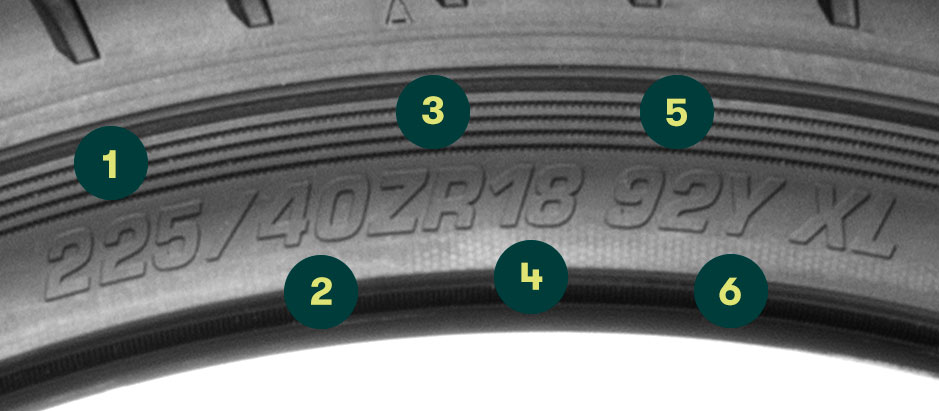
Just like your car, everything your trailer does has to be transmitted via its tyres, which means every pulling, turning and braking force requires grip. Trailer tyres should be treated precisely like car tyres, as the exact same penalties apply if not cared for. Look for a minimum of 1.6mm across each tyre, and never let a tyre stay on for more than 7 years, ideally swapping it every 5 years or so.
Trailer tyres are almost always smaller and narrower than the tyres of the vehicle they’re holding up, which means it’s worth spending just a little longer to make sure they’re in perfect condition. Inflate them to the trailer manufacturer’s precise settings for your chosen weight load and check them regularly for nicks, cuts and kerbing rash. Because your trailer always describes a tighter arc when turning than your tow car does, it’s not uncommon for sidewalls to kiss the odd kerb, and they’re reinforced to cope with a little light abuse for that very reason. Anything that looks beyond a scuff though, replace on the spot. It’s just not worth a blow-out at high speed. And, of course, don’t forget the spare, while you’re doing all these checks.
If you do find you need replacement trailer tyres, you’re in luck! We’ve recently launched an extensive range of trailer and specialty tyres here at Envoy that cover the most popular sizes and applications. They have excellent grip, wear and noise rates, and our talented team have managed to manufacture them with the finest rubber and steel, at a price point that shouldn’t strain your wallet too heavily. I recently added a set to my own trailer and I could feel the improvement from the very first towed mile!
So, do enjoy your towing, and use these checks and tips to ensure that you’re safe, legal and bound to get to your destination on time, with an immaculate load still very much in place on the back!
Make sure you’ve checked your trailer’s maximum weight against the load, the towing weight of your vehicle, and that the entire outfit’s weight and length is appropriate for your driving licence class.
Many drivers often forget that when hitched up, any 70 mph speed limits mean 60 mph, a 60 mph limit means 50 mph, and the motorway’s outside lane is strictly off limits! Follow these rules and you’ll arrive relaxed, penalty-free and ready to unload.