New Driver? Make sure your tyres can pass the test
Tuesday 17th March 2026
If you’ve just joined the ranks of the driving classes, Paul Cowland has some great tyre safety tips for you.
Congratulations! A little bird tells me that you’ve just passed your driving test! Welcome to the club. This hopefully means you’ll either have your first car, be looking for it, or perhaps have access to your family motor, but, whatever sweet whip you’ve got the keys to, we need to talk about your tyres.
While I fully appreciate that you probably just want to plan your first proper road trip, it’s your tyres that are going to have to get you there. It’s not an exaggeration to say that they’re the most important component on your car, so getting into the habit of checking and looking after them is a discipline that will serve you through your driving career, as well as keeping you – and all of your passengers – as safe as possible.
My Top Tips
The first thing to check is the tyre itself. You may have noticed that there are potholes the size of moon-craters out there at the moment, and it’s so very easy to nick or snag a tyre, leading to cuts, damage or strange egg-shaped protuberances on the sidewall. Needless to say, if you see any of these, it’s time to get a new tyre. This kind of damage can often lead to the tyre failing or ‘blowing-out’ and we really don’t want that on your inaugural roadtrip.
Pump them up
The next check is one you’ll ideally want to do every week. Tyre pressures! If you’re the dedicated sort that likes to wash your car on a regular basis, make this part of your weekly ritual. Correctly inflated tyres don’t just drive better, they last longer and give better fuel economy, so browse that owner’s manual, check the sticker on the door or look on the internet to find your pressures, and away you go. It’s well worth investing a few quid in a portable compressor that runs from your car’s 12 volt socket, meaning you can top up for free whenever you need to.
Tread carefully
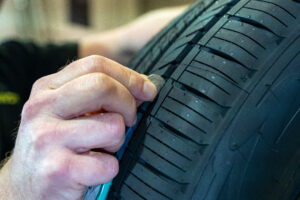
Now it’s time to check the tread of your tyres, and ideally, you want to look right across the full width of each one. A top tip here is to turn your front wheels on full lock, either way, so you can really get up close and personal, and ideally, you’re looking for at least 2mm across the board. A £2 tread depth gauge off your favourite online auction site is your friend here, or if you want to go fully old school, try a 20 pence piece in the grooves. If the edge of the coin is fully covered, you’re good to go! Remember though, the deeper the grooves, the more water the tyre can shift and the safer you will be when it rains. Don’t leave things to the very last minute though – when the tread sits level with the wear bars moulded into the tyre to tell you when to swap, that’s perhaps getting a little TOO much value from your tyres.
Old news
So you’ve checked the pressures and tread, and they’re all golden, so LET’S GOOO! Right? Well, hold your horses. We haven’t finished yet. Just because a tyre looks perfect, doesn’t mean that it is, now you need to see how OLD the tyre is. Being made of rubber, tyres have a very finite shelf life. Experts say 5 years is the ideal time to swap to new rubber, to keep things soft, supple and super-grippy, so if your tyre is older than that, it may not be working as hard as you’d like it to.
Check around the edge of the tyre and look for a little section with four numbers like ‘0423’ or ‘3612’. The first two numbers are the week of production, and the last two are the year. In this example, the first tyre is very much going to be at the top of its game, unlike the latter which is ready for a graceful retirement.
Also, do all of your tyres match? Ideally, you’ll have the same brand and model of tyre all around the car, or at least a matching pair on each axle. It’s NEVER a great idea to mix tyre types around a car, as it means each corner has a different level of grip.
New shoes on
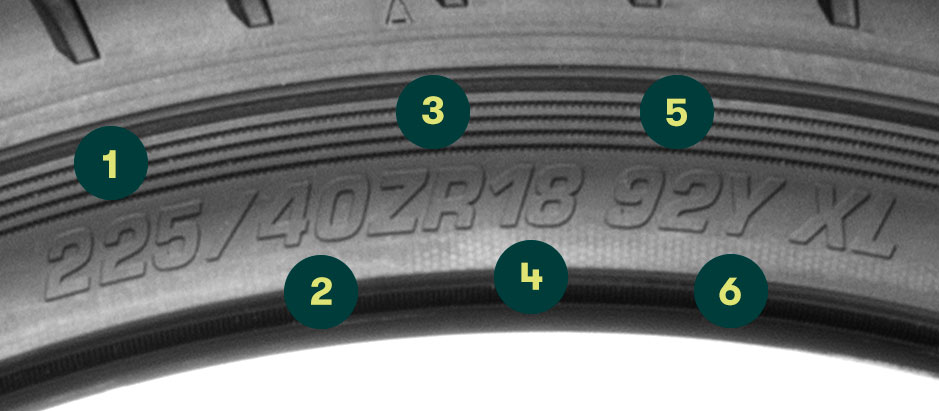
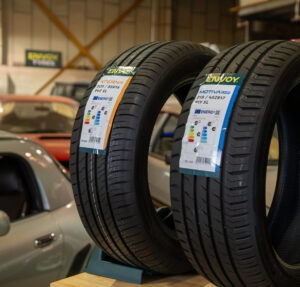
If you need new tyres, what size will you need? That’s easy enough to find out. Just look at the letters and numbers around the edge of the tyre until you find something along the lines of 215/45/R17 or 155/70/R13. That’s the tyre’s size, and if you want to get into the real detail of what all of that crazy code means, I’ve written a full blog on that here. But, don’t worry if you don’t, just reciting it to your local tyre shop is all you need to do. To them, it’s their second language.
Buyer beware!
Chances are, you might be shopping for your first car over the next few weeks, too. This is definitely one of life’s most exciting and emotional purchases, so try not to forget to apply all of the above when you’re looking at the car of your dreams. Just because a car looks shiny and perfect on a driveway or dealer forecourt, doesn’t mean that its tyres are in top condition. Take a moment to check the age, tread and condition of the rubber, and ideally that they all match each other, before haggling on a price. If you’ve got to budget for new tyres, you’ll want to factor that into your offer. Don’t forget to check the spare!
Miles of smiles
Armed with that knowledge, you’re undoubtedly going to have some very happy miles ahead. For every component on your car, the more you take care of it, the better it will take care of you, but nowhere is that more true than with tyres. Invest a little time and money to get the best you can afford, and then look after them on a weekly basis. They’ll reward you with safe, predictable handling and many happy motoring memories. Enjoy the open road, and stay safe!